
Walking on Light: The Story of Astoria's Purple Glass Sidewalks
If you have ever walked through downtown Astoria and noticed the small purple glass tiles embedded in the sidewalks, you have probably wondered about them. They catch the light in a way that feels almost intentional, like the city is winking at you.
Born from the Fire
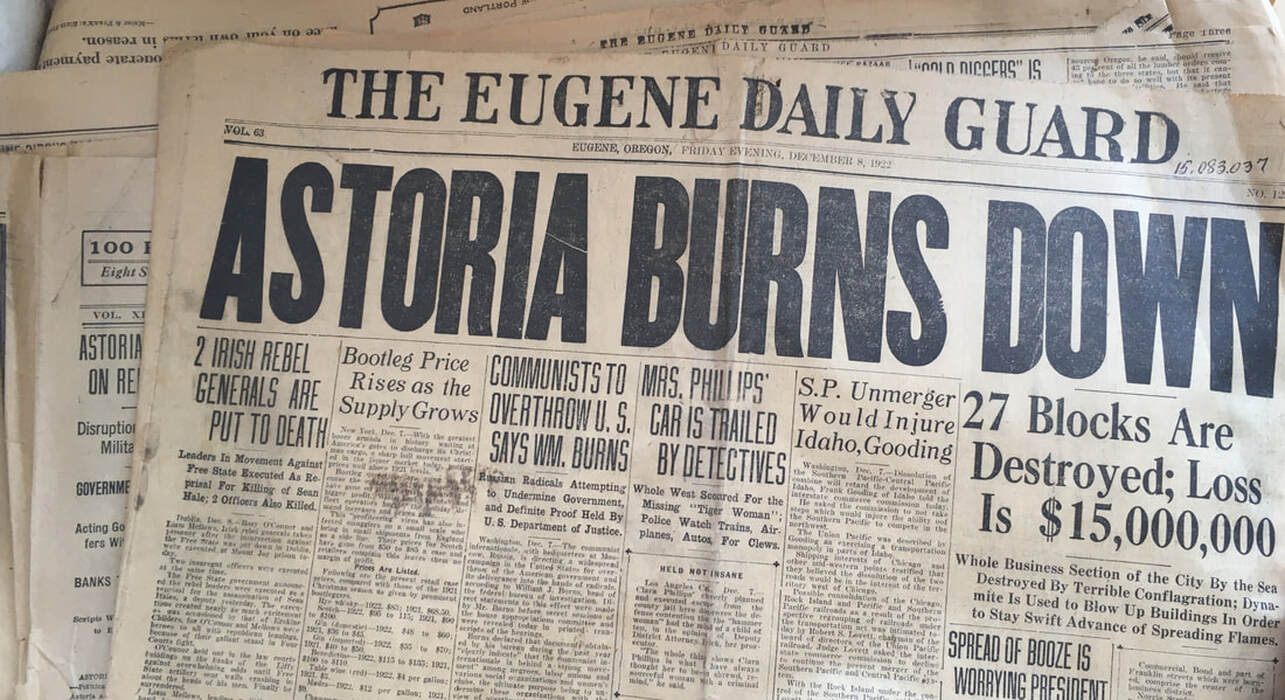
On December 8, 1922, a fire tore through downtown Astoria and destroyed over 200 businesses across nearly 30 blocks. The rebuild that followed was remarkable in its speed and ambition. Within months, new buildings were rising from the ash, this time built from brick, concrete, and mortar instead of wood.
As part of that rebuild, workers installed thousands of small glass prisms into the sidewalks throughout the commercial district. They were not decorative. They were practical. The prisms allowed natural light to filter down into the underground basements below the storefronts, illuminating spaces that would otherwise have been dark and unusable.
Over the following decades, something unexpected happened. The manganese dioxide in the glass reacted with decades of UV exposure and the tiles slowly turned purple. What began as a functional building material became one of the most distinctive and beloved features of downtown Astoria. Today there are over 45 tile grids throughout the district, some with up to 70 tiles each.
A Disappearing Landmark
By the time ADHDA launched the tile restoration project in 2011, many of the original tiles were cracked, missing, or covered over. Without active effort to preserve them, one of downtown Astoria's most unique physical features was quietly disappearing underfoot.
The challenge was finding someone who could actually make them. These are not tiles you can order from a catalog. The originals were hand-cast and over a century old. Nothing commercially available comes close to matching them.
ADHDA found their answer in Jamie Boyd of Azure Glass. Jamie hand-makes each replacement tile by fusing nine layers of clear glass at over 1,400 degrees for more than nine hours, then adds a purple plate on top to match the color of the originals. Each tile takes the better part of a day to make. Each one costs around $34.
ADHDA has been covering the cost and coordinates volunteer installation crews to place them one by one into the sidewalks of the historic district.
The Work Continues
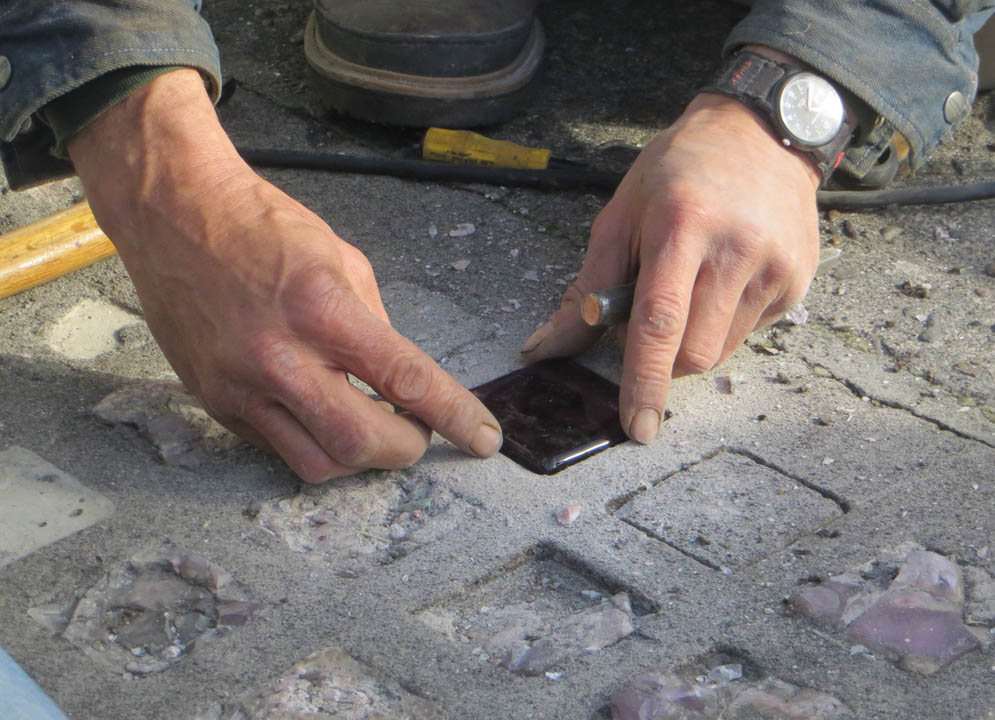
Since 2011 the project has replaced an average of 80 tiles per year. In 2023, a $5,000 grant from the State Historic Preservation Office allowed the team to replace 150 tiles in a single season. A 2024 grant pushed that number to 300.
The work is slow by design. These tiles are made by hand, installed by hand, and maintained by a community that understands what they represent. There is no fast version of this.
Artist Kate Speranza has found a way to honor even the tiles that cannot be saved. She collects the broken fragments recovered during restoration and turns them into jewelry, small wearable pieces of Astoria's history that people can carry with them.
Why It Matters
The purple tiles are a small thing in the grand scope of historic preservation. They are not a massive historic building or a important historical landmark. They are pieces of glass in a sidewalk.
But they are also a perfect example of what ADHDA believes about this city. Downtown Astoria's character is made up of hundreds of small details that most people walk past every day without thinking about. The work of preserving it is patient, specific, and often invisible until it is gone.
The tiles are still here because this community decided they were worth saving, one at a time, at $34 each, fused by hand at 1,400 degrees.
That is Astoria. And that is the work.
Want to support preservation projects like this one? A donation to ADHDA goes directly into the grants, programs, and community efforts that keep downtown Astoria intact for the next generation.
Make a Donation
Empower The Work To Continue
ADHDA is a nonprofit funded by community supporters like you. Every contribution goes directly into the events, preservation projects, and programs that keep downtown thriving. If you want to see more of this work done, consider becoming a supporter through a donation.


